St. Petersburg has 12,714 homes built before 1940, and Tampa has another 15,377. A lot of them are bungalows, and sooner or later most of their owners ask us the same question: should this room have crown? Sometimes the honest answer is no. When it is yes, the profile and the size decide whether the room looks finished or looks remodeled.
The short answer: a bungalow wants crown that is simple, painted and scaled to its ceiling, usually a single cove or stepped profile rather than a tall built-up cornice. Many original bungalows had a picture rail instead of crown, and in those rooms a picture rail is often the more authentic choice. J Fox LLC matches new trim to the house's existing profiles.
Did bungalows originally have crown moulding?
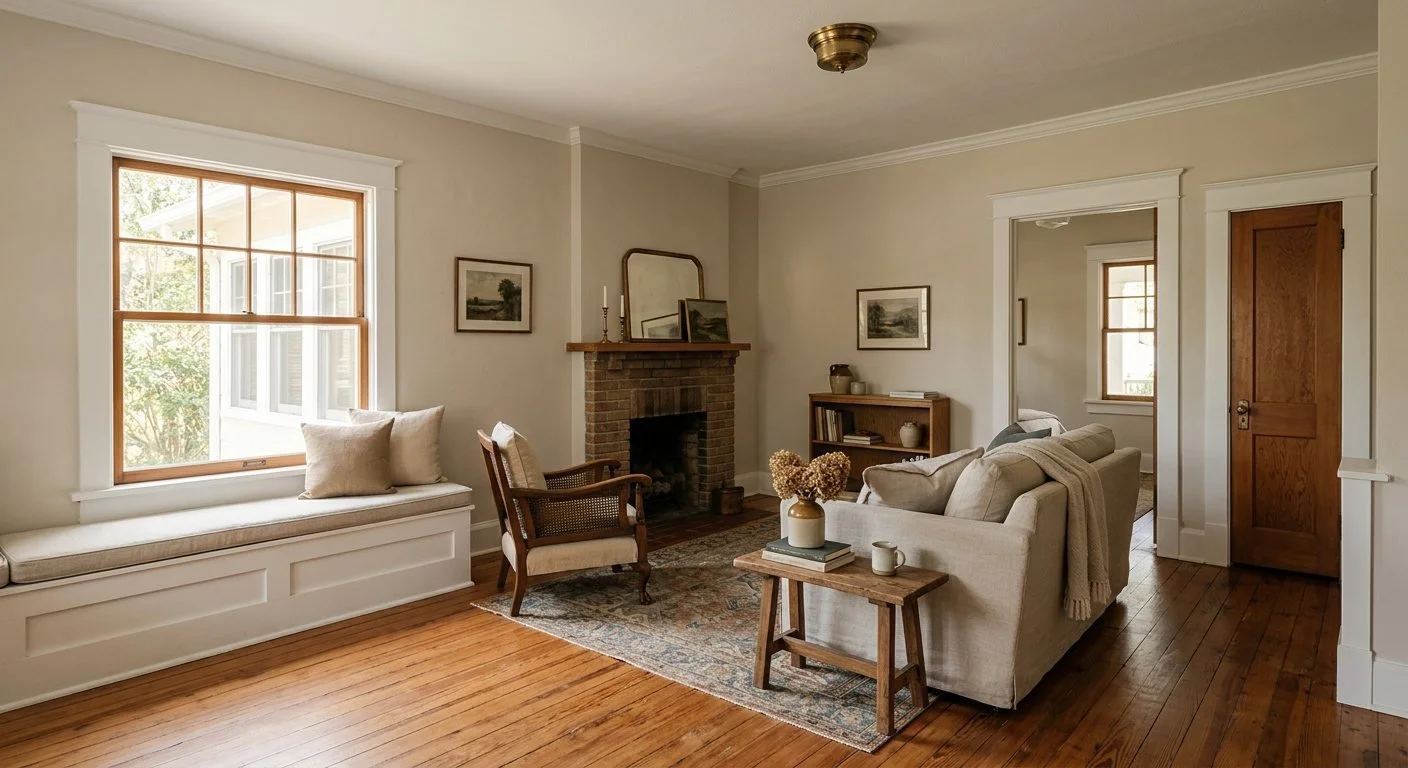
Many did not. Bungalow and Craftsman interiors were built around flat, honest trim: wide flat casing, a plain baseboard, and often a picture rail set a little below the ceiling instead of crown at the ceiling line.
That matters because the first job is reading what your house already has. If the rooms carry a picture rail, adding a large crown above it gives the room two competing lines at the top of the wall. If the house has plain casing and no rail, a simple crown can finish the room without arguing with anything.
How big should crown be for a bungalow ceiling?
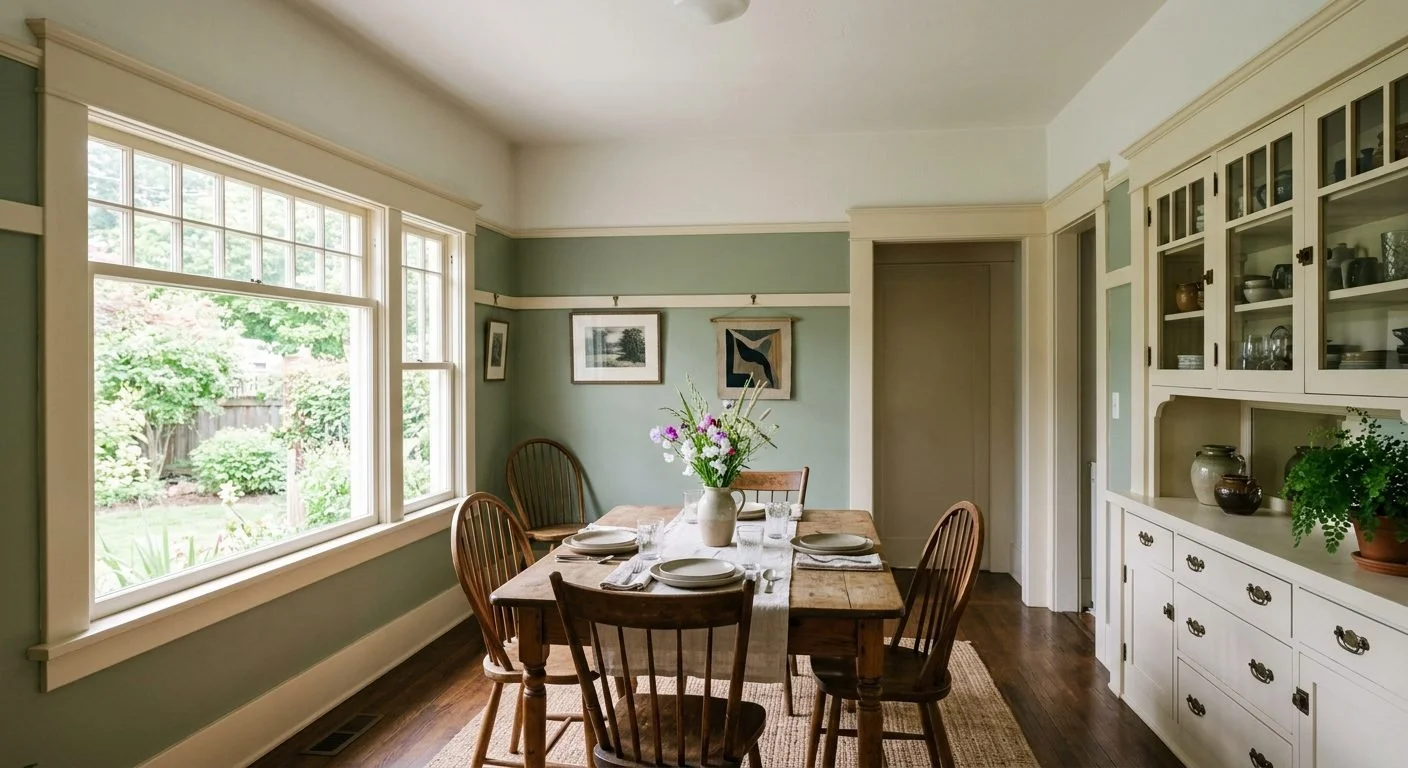
Smaller than most people expect. Crown is sized to the ceiling it sits under, and a profile built for a tall formal room crowds a bungalow wall.
Published sizing guides put crown at roughly 2.5 to 6 inches for an 8 foot ceiling and 3 to 7.5 inches for a 9 foot ceiling, which works out to about half an inch to an inch of crown per foot of ceiling height. In a bungalow the lower half of that range usually suits the simpler trim, and larger or built-up profiles belong on taller ceilings. It is a rule of thumb, not a formula. Wide original casing can carry a slightly bigger crown, and a small room with low windows can want less. We set the final size standing in the room, not from a chart.
Which crown profiles suit a bungalow?
The ones that look like they belong to the rest of the woodwork.
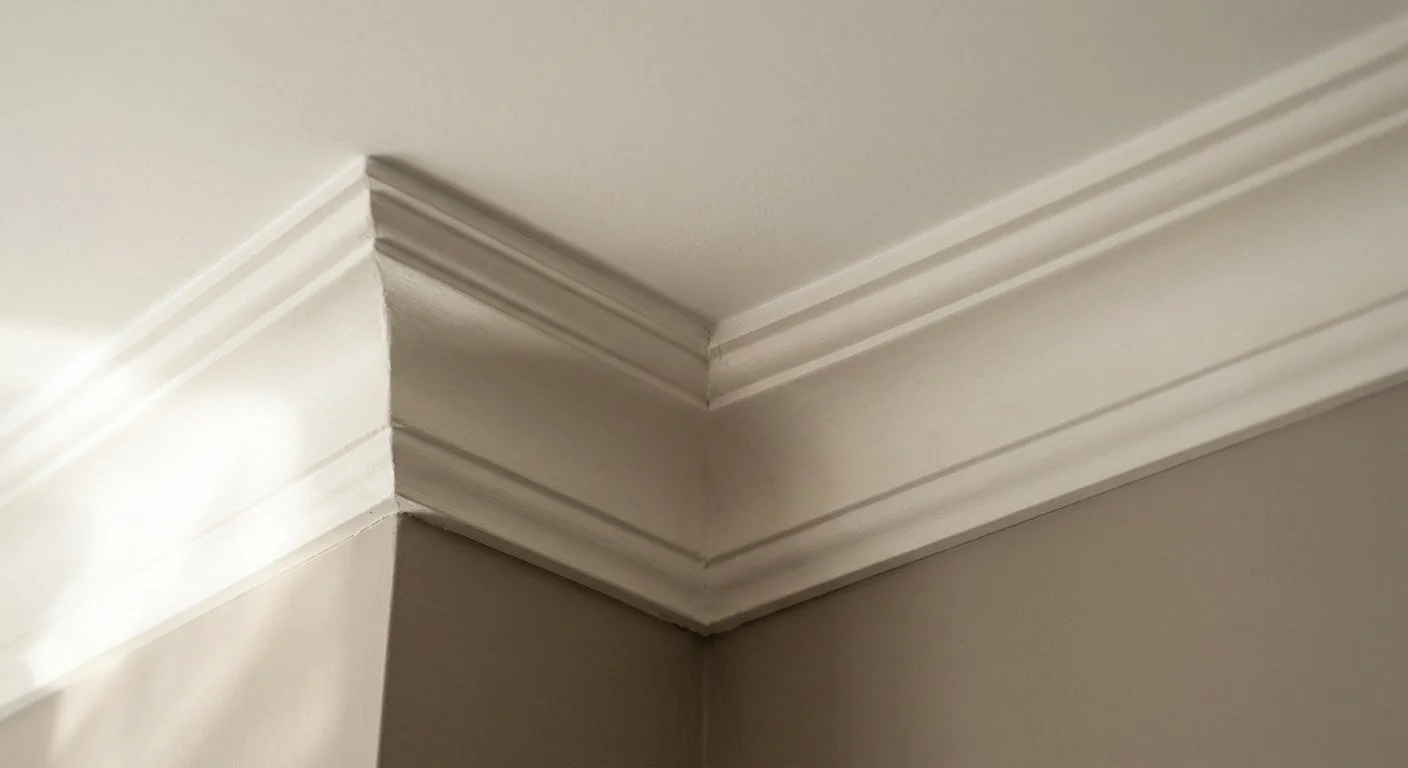
Cove and simple stepped profiles. Quiet curves or two clean steps. They read period-appropriate and they sit comfortably beside flat casing.
A modest two-piece build-up. A small crown with a flat band or a bed moulding under it. This gives a living or dining room more presence while staying in scale, and it is how we get weight without going ornate.
What to avoid. Tall, heavily detailed colonial or classical crown. It is the right answer in a Mediterranean Revival living room with a high ceiling and the wrong one in a Craftsman bungalow.
How do you make new crown look original?
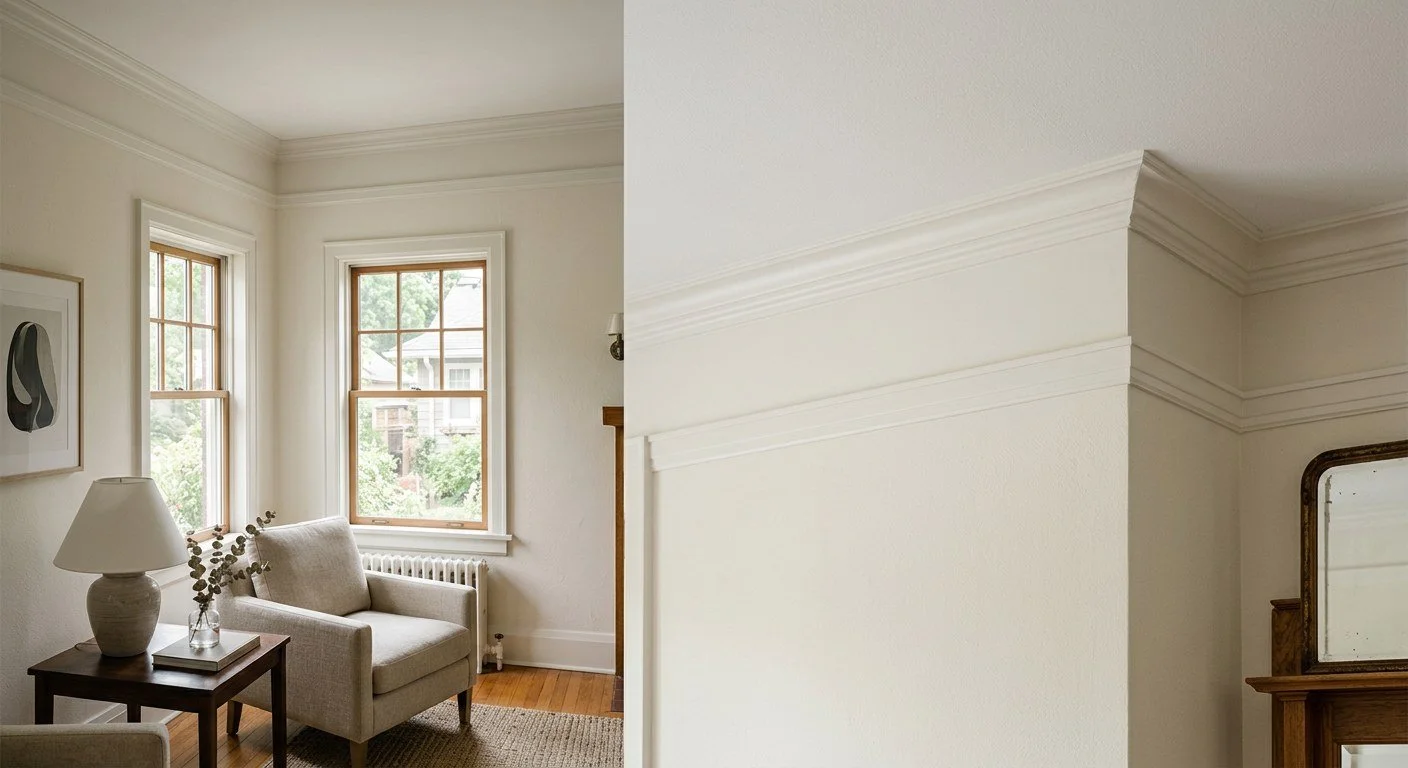
By tying it into the trim that is already there.
New crown should share the weight of the existing casing and baseboard and take the same paint and sheen. Older plaster ceilings are rarely flat, so the top edge gets scribed or carefully filled rather than left with a gap that shows the wave. Joints are glued and pinned rather than left to caulk, which is what keeps miters tight through a humid Gulf-coast summer. If the home's original profile is still on the walls somewhere, we match it, the same way we described in how we match new trim to a home's original molding.
Which rooms are worth it?
Living and dining rooms first. They are the rooms guests see, the rooms with the most wall length, and the rooms where the original builder was most likely to have spent on trim. A primary bedroom is a reasonable third.
Kitchens, baths and small bedrooms often look better without it. The cost of crown is mostly in the corners and the fitting, not the material, so a small room with four corners and a closet return can cost more per foot than a large one. Spending that in the living room usually buys more.
Our trim and finish carpentry page covers crown, casing and full trim packages, and finish carpentry vs. trim carpentry explains where crown fits in the wider craft.
Where are the bungalows this applies to?
J Fox LLC is based in St. Petersburg and works across Greater Tampa Bay, within about 50 miles. The bungalows this article is about are concentrated in Historic Kenwood and Old Northeast in St. Petersburg and in Seminole Heights in Tampa, where most of the area's pre-1940 houses stand.
Frequently asked questions
Should I put crown moulding in a Craftsman bungalow?
Only if it suits the rest of the trim. Many original bungalows used a picture rail instead of crown. If your rooms have flat casing and no rail, a simple painted cove or stepped crown usually fits. If they have a picture rail, restoring or matching that is often the more authentic choice.
What size crown moulding for a 9 foot ceiling?
Sizing guides give roughly 2.5 to 6 inches for an 8 foot ceiling and 3 to 7.5 inches for a 9 foot ceiling. In a bungalow the lower half of that range usually looks right. Wide existing casing can carry a little more, and small rooms often want less. We confirm the size in the room before ordering material.
Can you match the crown moulding already in part of my house?
Yes. If the original profile is still sold we source it. If it is not, we build it up from stock pieces or have a custom knife milled, so new runs match the old ones.
What material do you use for crown in Florida?
Primed poplar or MDF in living areas and moisture-resistant stock in baths and laundries, with joints glued and pinned so miters stay tight through the humid months.