Finish Carpentry vs. Trim Carpentry in St. Petersburg & Tampa Bay
People use "trim carpenter" and "finish carpenter" as if they mean the same thing. They are related, but they are not identical, and the difference matters when you are hiring someone to work on a St. Petersburg or Tampa Bay home. The short version: trim carpentry is one part of finish carpentry. Trim work is the molding; finish carpentry is the whole craft, from built-ins to stairs to matching a home's original woodwork.
Below is exactly what each term covers, why the distinction changes who you should hire, and how the age and style of Tampa Bay homes make it matter more here than in a subdivision full of 2015 builds.
The short answer: trim is part of finish
Trim carpentry means installing moulding: crown, baseboard, casing, chair rail. Finish carpentry is the broader craft: trim plus built-ins, cabinetry, stairs, paneling, and all the detail work that completes a home's interior. Every finish carpenter can install trim. Not every trim installer can design and build the rest.
In practice, when a homeowner in Shore Acres or the Old Northeast calls asking for "a trim guy," what they often actually want is a finish carpenter: someone who can also design a built-in, replicate a molding profile from 1925 that nobody stocks anymore, and make new work disappear into old. That gap between the two skills is where most "why does this look a little off?" jobs come from.
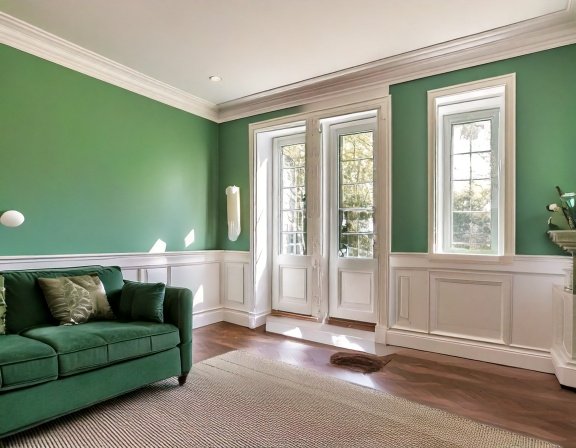
Trim carpentry: crown, casing, and baseboard installed and finished in a St. Petersburg living room.
What trim carpentry covers
Trim carpentry is the moulding layer of a home. On most Tampa Bay projects it includes:
Crown moulding, single-piece and built-up
Baseboard and shoe along every wall
Door and window casing
Chair rail and picture-frame moulding
Good trim work is about precision: tight miters, clean returns, profiles scaled correctly to the room, and joints that stay tight as the house moves through Florida's humidity swings. Trim is the most visible carpentry in a home, which is why sloppy trim is so easy to spot. Gapped corners, caulk filling joints that should have been cut tight, a crown that is too small for a tall Snell Isle ceiling: the eye catches all of it, even when the homeowner cannot name what is wrong.
Trim is also where Florida's climate quietly tests the work. A miter that was perfect in a dry January can open up by August if the carpenter did not account for seasonal movement. That is a finish detail, not just an installation step, and it is one reason we treat even a straightforward crown run as finish carpentry rather than piecework.
What finish carpentry adds
Finish carpentry includes everything above, plus the built pieces that make a home feel custom:
Custom built-ins: bookcases, entertainment centers, window seats
Cabinetry: kitchens, baths, laundry rooms, home offices
Stairs: treads, risers, skirts, railings
Wall treatments: wainscoting, shiplap, board-and-batten, paneling
Coffered and beamed ceilings
Trim matching and repair in older homes
The throughline is design and joinery, not just installation. A finish carpenter is thinking about proportion, how a new piece meets existing trim, which material holds up in a coastal climate, and how the whole room reads when the work is done. It is the difference between installing parts and building something that belongs.

Finish carpentry: designed and built white-oak bookcases with fireplace paneling, matched to the room's trim.
“Every finish carpenter can install trim. Not every trim installer can design a built-in and make it look original to a 1925 bungalow.”
Why the distinction matters when you hire in Tampa Bay
If your project is "install crown moulding in the living room," a competent trim carpenter handles it. If your project is "build a wall of built-ins that look original to my 1925 Historic Kenwood bungalow and match the existing trim," you want a finish carpenter: someone who can design the piece, replicate a profile that is not sold anymore, and blend new work into old.
The risk is hiring for the narrower skill and expecting the broader result. Plenty of disappointing built-ins and cabinetry across St. Petersburg were installed by people who install trim well but do not design and build. The parts go up; the proportions are off, the reveals do not line up, and the piece reads as added-on rather than original.
Tampa Bay makes this sharper than most markets because of the housing stock. St. Petersburg and Tampa are full of 1920s Craftsman bungalows, Mediterranean Revival homes, mid-century ranches, and newer coastal condos out on the beaches. Each era has its own trim language and proportions:
Old Northeast and Historic Kenwood bungalows have simple, honest profiles and modest ceiling heights, so new work has to stay in scale.
Snell Isle and Venetian Isles homes often carry taller ceilings and more formal detailing that a bungalow-sized crown would look lost against.
Mid-century ranches around Pinellas Park and Largo want cleaner, flatter trim than an ornate built-up crown.
Coastal condos on the beaches add a humidity and material challenge on top of the design one.
Matching new carpentry to any of these is finish work, not trim installation. It is the reason we describe ourselves as finish carpenters first, even on a job that is "just" moulding.
A real example: a built-in that had to match
A recent project in the Old Northeast is a good illustration. The homeowners wanted built-in bookcases flanking the fireplace in a 1924 bungalow, and the one thing they cared about most was that the new piece not look new. The original casing and baseboard had a specific profile that no lumberyard carries anymore.
A trim installer would have framed the boxes and run the closest stock baseboard around them. Instead, we took a clean cross-section of the original profile, built it back up from several standard pieces so the base of the new units matched the room exactly, and scaled the crown on top to the bungalow's ceiling rather than dropping in a formal profile built for a taller room. When it was painted out, the built-ins read as though they had been there since the house was drawn. That is finish carpentry: the design, the matching, and the joinery, not just the install.
Not sure which one your project needs?
Tell us what you are picturing. A licensed St. Pete finish carpenter will look at your existing trim and tell you straight what the job actually takes, then follow up with a clear written estimate.
How we think about it at J Fox LLC
We are finish carpenters first. That shapes even our trim work: we are matching profiles, thinking about proportion, and finishing details the way we would on a custom built-in. And when a project is bigger than moulding, a fireplace wall, a stair, a wall of cabinetry, we can design and build it, not just install parts.
It also shapes how we spec materials for this climate. We build casework from quality plywood because it stays flat in humidity, use solid hardwood where its movement can be controlled by good joinery, and finish everything to hold up to daily Florida life. If you want the deeper version of that, we wrote a whole guide on the best wood for built-ins and cabinets in Florida humidity. And the matching itself, the signature part, is broken down step by step in how we match new trim to a home's original molding.
You can see the full range on our finish carpentry service page, the moulding-specific work on trim & crown moulding, and the built pieces on custom built-ins. If you would rather meet the person doing the work first, that is on our about page.
Which one does your project need? A quick guide
A fast way to sort it before you call:
You want moulding added or replaced (crown, base, casing) and nothing built: a trim carpenter can do it, but a finish carpenter will match and scale it better in an older home.
You want something built: built-ins, a media wall, a window seat, cabinetry, a stair. That is finish carpentry. Hire for the design-and-build skill.
Your home is pre-1960 or architecturally specific (bungalow, Craftsman, Mediterranean Revival): lean finish carpenter, because matching the existing woodwork is the hard part.
You are combining both (new built-ins that tie into existing trim): definitely finish carpentry, since the two have to be designed together.
When you are not sure, describe the outcome you want rather than the task. "I want this wall to feel finished and match the rest of the house" tells a good carpenter far more than "I need some trim," and it is the fastest way to get the right person on the job.
Common Questions
Finish vs. trim carpentry: FAQs
Is a finish carpenter more expensive than a trim carpenter?
Often, yes, because finish carpentry is a broader, more design-driven skill. But for moulding-only work the rates are similar, and hiring a finish carpenter for an older St. Petersburg home usually saves money overall by getting the match and proportions right the first time instead of paying to correct them.
Do I need a licensed contractor for trim or built-in work in Florida?
For small moulding jobs, licensing rules are looser, but for larger built-in, cabinetry, and structural work you want a licensed contractor carrying liability insurance. J Fox LLC is a licensed Florida general contractor (#CGC1539933) and insured. You can verify any license through Florida's DBPR and the Pinellas County licensing board.
How much does crown moulding installation cost in Tampa Bay?
Crown pricing depends on the profile, ceiling height, and how many corners and returns a room has, so a single per-foot number is misleading. Simple single-piece crown in a standard room runs less; built-up profiles and tall or complex rooms cost more. We give a written per-room estimate after a short walkthrough. See our trim & crown moulding page for details.
Can one carpenter both install trim and build custom built-ins?
A finish carpenter can do both, and that is the advantage: one person designing the built-ins and running the trim keeps proportions, reveals, and finishes consistent across the room. A trim-only installer can handle the moulding but typically will not design and build the cabinetry.
How do you match new trim to my home's original molding?
We identify the exact profile from a cross-section, then source it or replicate it (often by building it up from stock pieces or having a custom knife milled), match the proportion and finish, and install so the transitions disappear. The full process is in our post on matching original molding.