A staircase is usually the first thing a visitor sees, and in a lot of Tampa Bay houses it is the most dated thing in the entry. Orange toned oak, hollow metal spindles, carpet worn down the middle of each tread. Owners assume the fix is a rebuild. It almost never is.
The short answer: yes, in most houses. The framed carriage that carries the load stays where it is. What gets replaced is everything you see and touch: treads, risers, skirt boards, newel posts, balusters and the handrail. The geometry does not change, so there is no structural work. J Fox LLC does this as finish carpentry, not demolition.
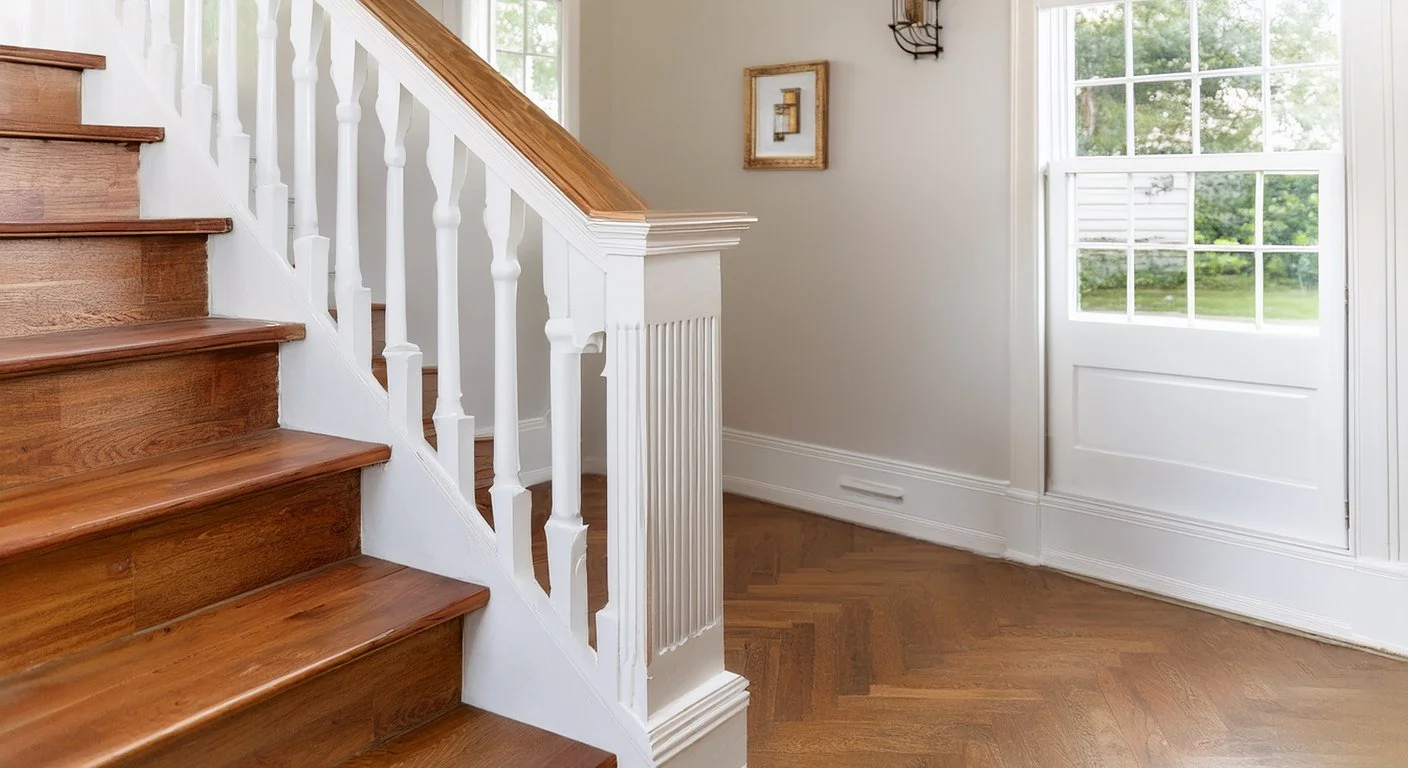
What stays and what gets replaced?
Think of a staircase as two things. Underneath is the carriage, the sawn stringers and framing that set the rise and run of every step. That part is structural, and in a sound house it stays.
On top is everything you interact with. The treads you step on. The risers between them. The skirt board where the stair meets the wall. The newel posts at the bottom and at any landing. The balusters between the rail and the treads, and the rail itself. Every one of those is finish carpentry, which means it can be replaced without changing where the stairs are or how they are built.
That is why the work is closer to a trim project than a construction project. We explained the distinction in finish carpentry versus trim carpentry.
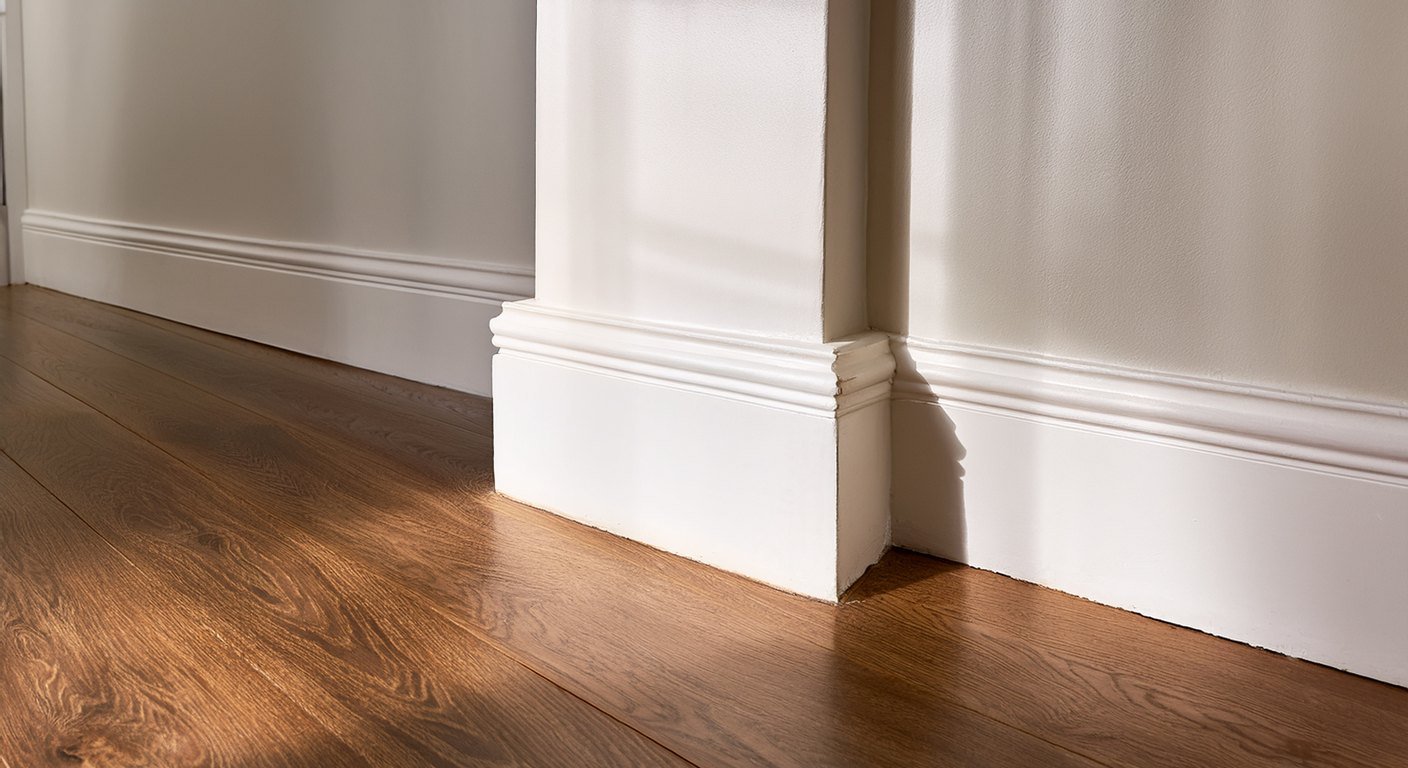
Which parts make the biggest difference?
Treads and risers. Going from carpet or dated oak to new solid treads is the single largest change. J Fox uses solid red or white oak treads with poplar risers, and every board is acclimated on site before install, because wood that goes in dry in a Florida house moves later. Stained treads over painted risers is the classic combination and suits both bungalows and newer builds.
Skirt boards. The trim board along the wall. A crisp skirt scribed to the wall is what separates clean carpentry from a patched look, and it is the detail most people cannot name but always notice.
Newel posts. Heavier, better proportioned newels make a railing feel solid before anyone touches it.
Balusters and rail. Thin builder grade spindles to square wood balusters changes the whole character, and so does the reverse, thinning a heavy rail down for a more open look.
Not everything has to happen at once. Treads and a newel first, the rest of the railing later, is a common sequence.
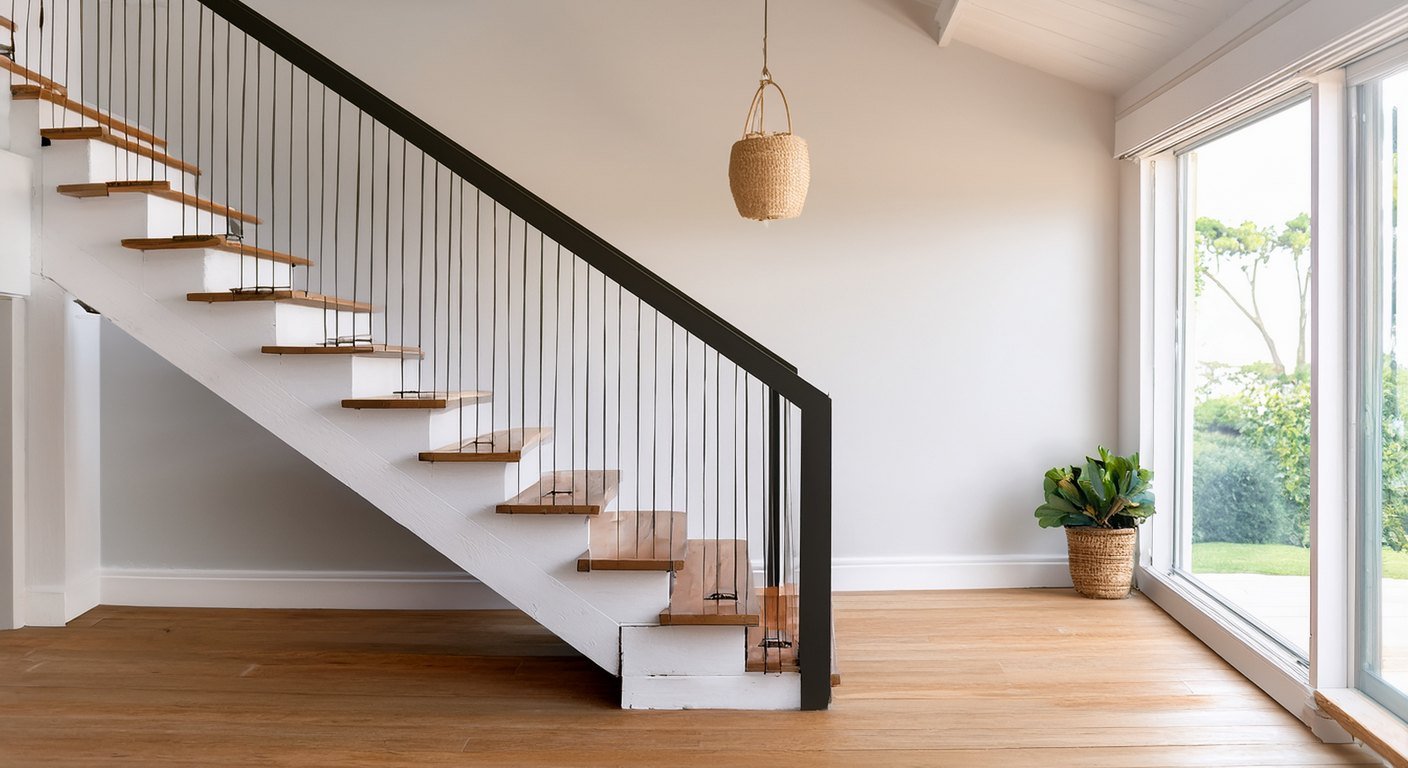
Cable rail or wood balusters?
It depends on the house, and the honest answer is that the house usually decides.
Horizontal cable rail suits a mid century ranch or a renovated open plan interior, where the point is to keep the sightline open and the architecture light. Largo, Pinellas Park and the newer parts of Clearwater are full of 1960s and 1970s houses where it looks right.
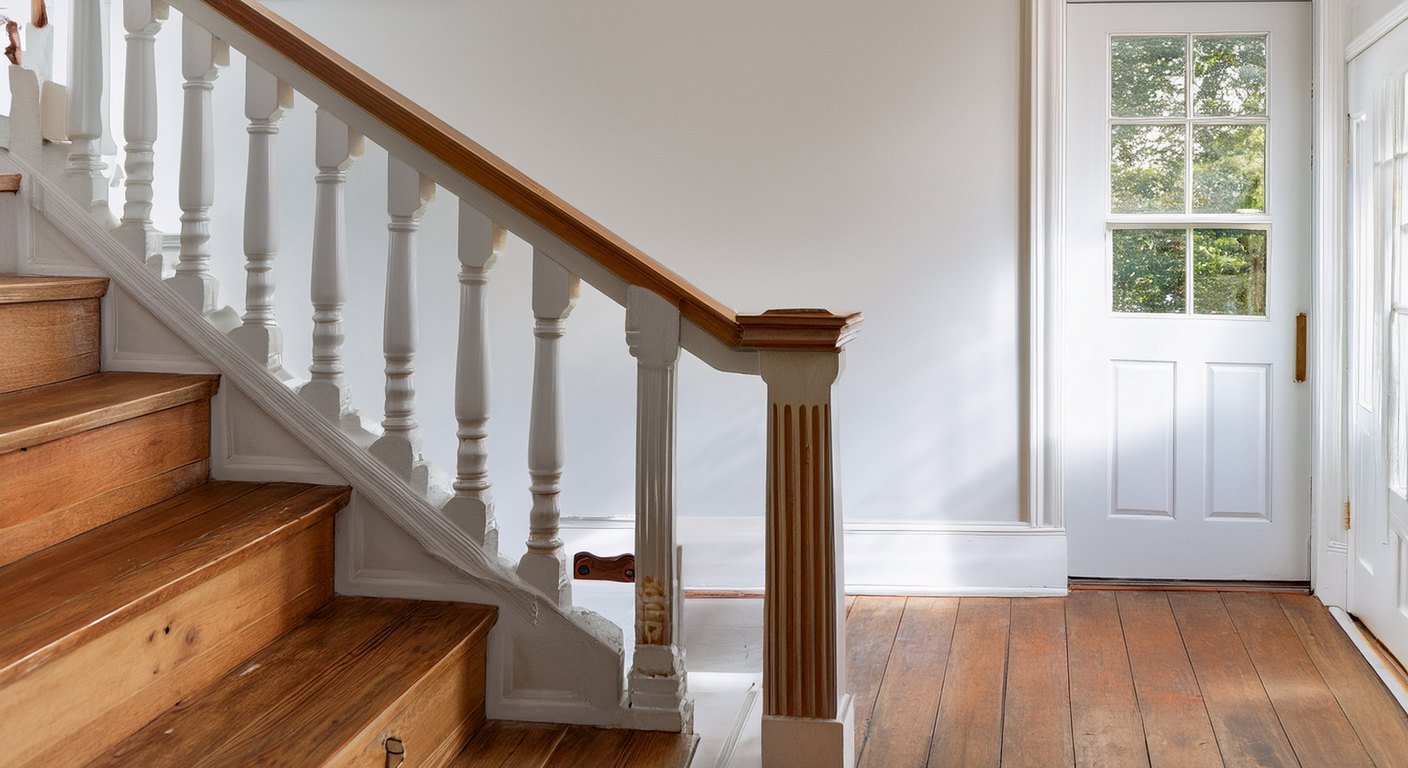
In a 1920s bungalow in St. Petersburg or Seminole Heights, wood balusters almost always read better, because they echo the era the house was built in. Crown moulding styles for Florida bungalows makes the same argument about the ceiling line: the house tells you what it wants.
What does it cost to update a staircase?
On J Fox's published pricing, new oak treads and risers typically start around $2,500 to $4,500, and a cable railing conversion around $5,000. A full staircase rebuild costs more, and most houses do not need one. We walk the stair, check the carriage for squeaks and flex, and give a written estimate that says which category the job is in.
Our custom staircases and stair trim page covers the full scope, and trim and finish carpentry covers the skirt boards, casing and base that usually get touched at the same time.
When does a staircase actually need rebuilding?
When the carriage is the problem. Treads that flex underfoot, a stair that squeaks from the stringers rather than a loose tread, or a run that was built out of code and needs its rise and run corrected. Those are structural and we say so after seeing it. Everything else is a refresh.
Where does J Fox LLC do staircase work?
J Fox LLC is based in St. Petersburg and refreshes staircases across Greater Tampa Bay, within about 50 miles, from the bungalows of St. Petersburg and Tampa to the ranch houses of Largo and Pinellas Park.
Frequently asked questions
Can you replace stair treads without replacing the whole staircase?
Yes. The framed carriage underneath stays. Treads, risers, skirt boards, newels, balusters and the rail are all finish carpentry and can be replaced on their own or together.
How much do new oak stair treads cost in Tampa Bay?
On J Fox's published pricing, new oak treads and risers typically start around $2,500 to $4,500, and a cable railing conversion around $5,000. A written estimate follows a walkthrough.
What wood do you use for stair treads in Florida?
Solid red or white oak treads with poplar risers, acclimated on site before install so the boards do not move after they go in.
Can we use the stairs while the work is being done?
In most cases yes, with the work staged so the run stays usable. We say what to expect in the estimate.