Most living rooms in Tampa Bay have one long blank wall with a television on a stand in front of it, and the stand is where the remotes, the game console and the cables go to die. A media wall is the built-in that fixes that, and it is the one we are asked about most after fireplace surrounds.
The short answer: a good media wall is designed around three things: the TV at seated eye level, cables you never see, and storage sized to what you own. The fourth is material: particle board swells and sags in Florida humidity. J Fox LLC builds media walls from cabinet grade plywood and matches them to the home's trim.
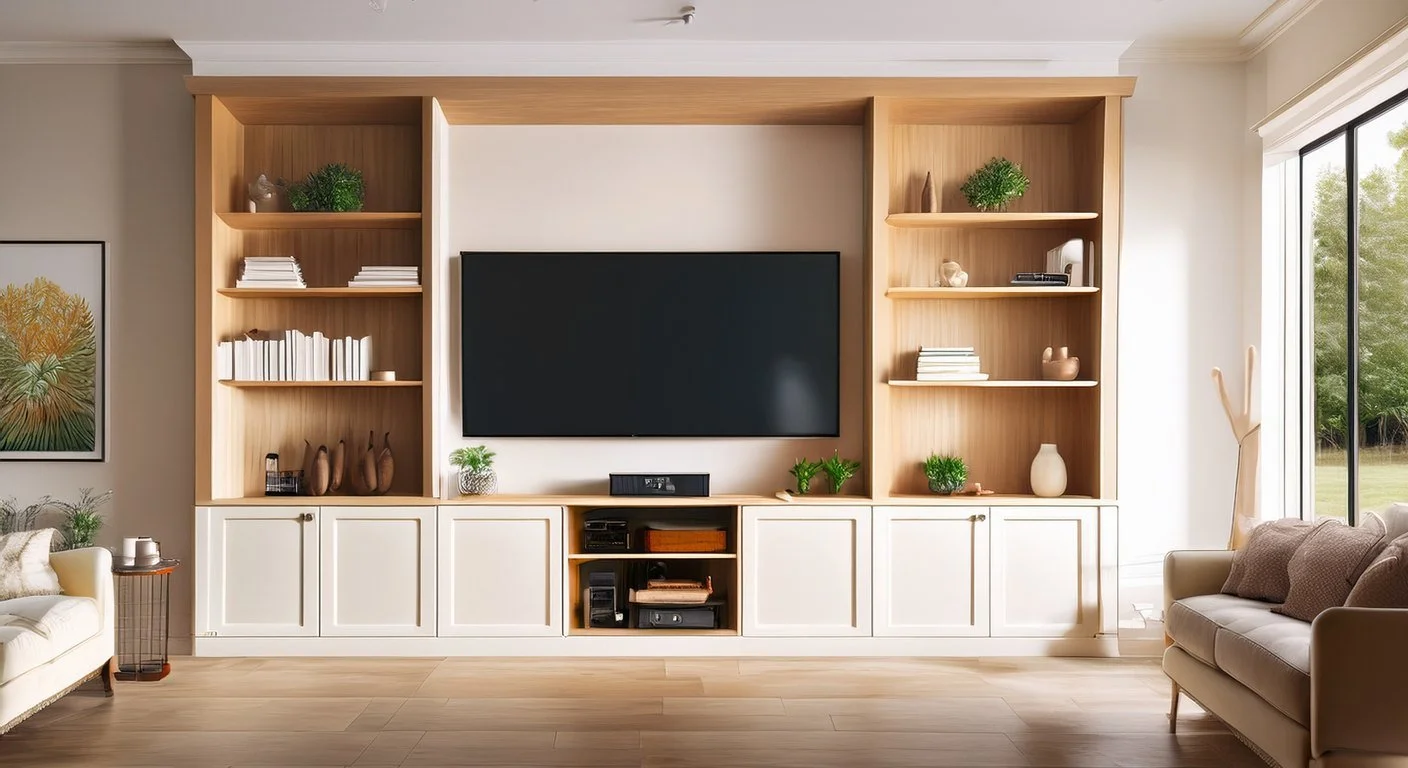
Where should the TV sit on a media wall?
At seated eye level, which is lower than most people hang it. Measure from the floor to your eye line on the sofa you actually use and center the screen there. That usually puts the bottom of the screen just above a low base cabinet.
A media wall makes this easy because the cabinetry sets the height. The TV sits in a recess or on a panel between the base cabinets and the upper shelving, and the whole composition is drawn around it. A screen hung high on a bare wall is a compromise. A screen set into joinery at the right height is architecture.
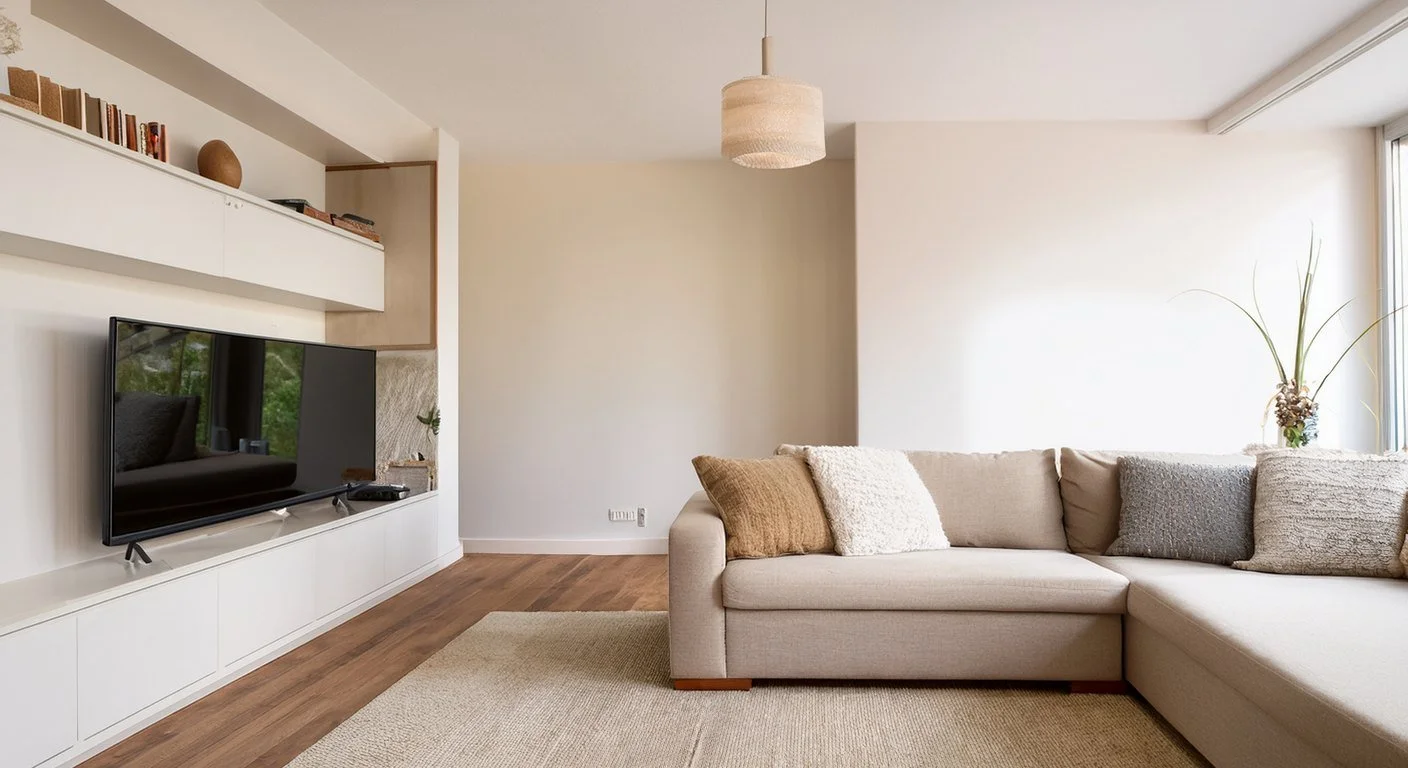
How do the cables disappear?
Behind the wall. Every media wall we build has a chase, a hidden channel behind the back panel that runs from the TV recess down to the equipment cabinet. Power, HDMI and network cables run inside it. The equipment lives in a base cabinet with a vented door or a back cutout for heat, and nothing is visible from the sofa.
Plan the chase before the wall is built, not after. Adding a soundbar later, moving to a larger screen, running a cable to a second room: all of that is easy if the chase exists and ugly if it does not.
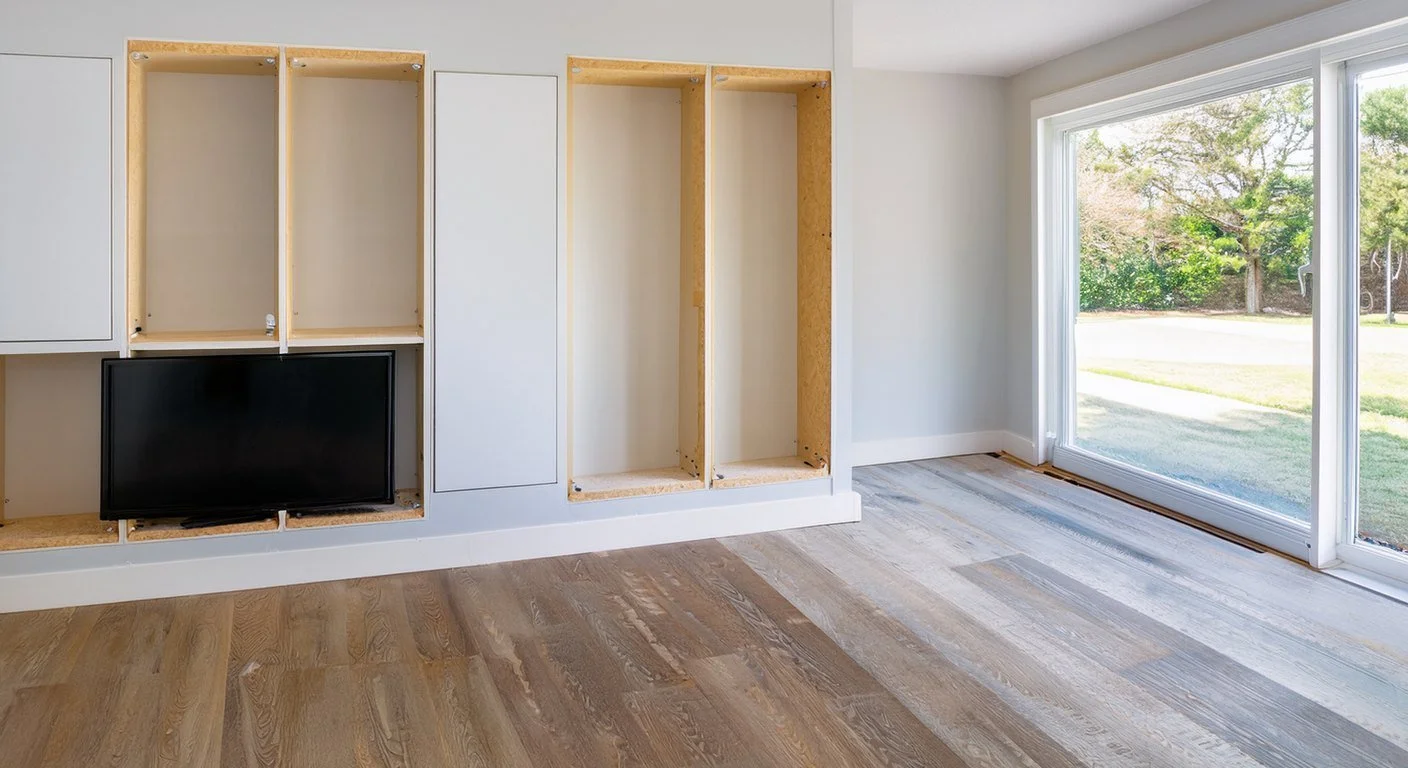
How much storage does a media wall need?
Less than the catalog photos suggest. In Pinellas and Hillsborough, one and two person households make up roughly 69% to 78% of the market, which means the media wall built for a family of five with a toy cabinet and a homework drawer is the wrong wall for most of the rooms here.
The right wall usually has closed base cabinets for the equipment and the things you do not want to see, open shelving above for the things you do, and nothing else. Every open shelf is a shelf you have to style. We start by asking what has to live on the wall and sizing the cabinetry to that, not to the wall's full width.
A media wall often pairs with a fireplace surround when the firebox shares the wall, and the two are designed together so the mantel line and the cabinet tops agree.
Why does the material matter in a Florida living room?
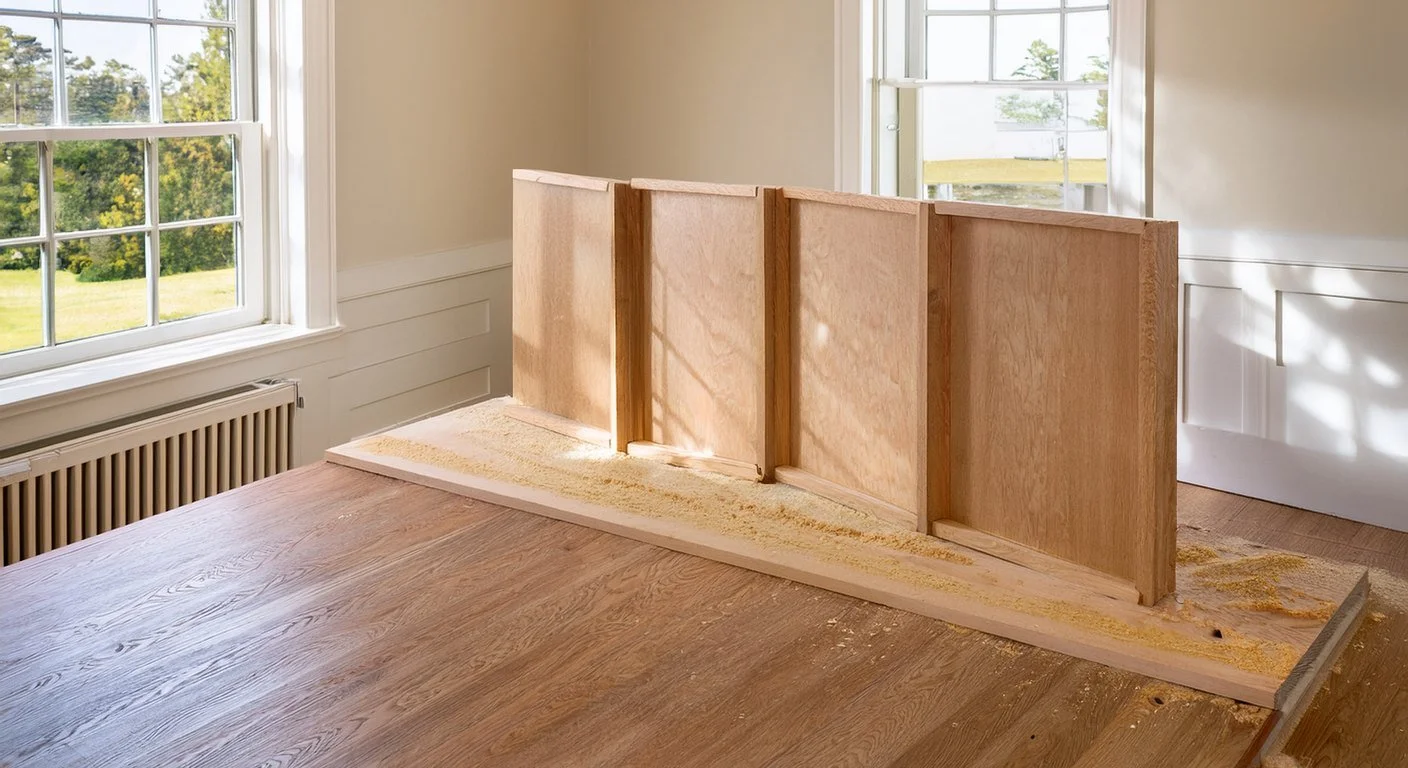
Because humidity does not care how the cabinet looks on install day. Particle board and most flat pack media units swell at the edges and sag under a television's weight within a few summers. J Fox builds media walls from 3/4 inch cabinet grade plywood with real joinery, the same boxes we use for kitchen cabinets, and the casework is largely pre-built in the shop so the room is disrupted for days rather than weeks. The best wood for built-ins in Florida humidity goes into the materials in detail.
What does a media wall cost in Tampa Bay?
On our published pricing, most built-in projects start around $1,500, and a full media wall with base cabinets, a TV recess and shelving sits well above that depending on width, finish and whether we are matching existing trim. We measure the wall, confirm the screen size and the equipment, and give a free written estimate. Our custom built-ins page covers media walls, bookcases and window seats.
The TV wall that does not look like a TV wall
The test of a media wall is what it looks like with the screen off. If the joinery matches the room's casing and baseboard, the proportions follow the ceiling height, and the finish matches the rest of the trim, it reads as part of the house. That is the standard, and it is why we treat a media wall as finish carpentry rather than furniture.
Where does J Fox LLC build media walls?
J Fox LLC is based in St. Petersburg and builds media walls across Greater Tampa Bay, within about 50 miles. The long blank living room wall this article describes is standard in the 1960s and 1970s ranch houses of Largo, Pinellas Park and Seminole, where that era makes up half or more of the housing.
Frequently asked questions
How high should the TV be on a media wall?
At seated eye level, measured from the sofa you actually use. The cabinetry sets that height, with the screen recessed between the base cabinets and the upper shelving.
Can you hide all the cables in a media wall?
Yes. A chase behind the back panel carries power and signal cables from the TV recess to a vented equipment cabinet, so nothing shows from the room.
What is a media wall built from?
J Fox builds them from 3/4 inch cabinet grade plywood with real joinery, pre-built in the shop, because particle board swells and sags in Florida humidity.
How long does a media wall take to install?
Many built-ins are completed in one to seven days on site depending on scope and finish, because the casework is built in the shop first. The estimate gives a realistic timeline.