Ceilings are the surface nobody thinks about until a room feels flat, and then nothing else fixes it. The two finish carpentry answers are a coffered ceiling and a tray ceiling. They are often confused, they suit different rooms, and the first question is always the same: how tall is the ceiling?
The short answer: a coffered ceiling is a grid of beams on a flat ceiling, and it wants height, because the beams drop into the room. A tray ceiling is a center panel stepped up from the perimeter, and many newer Tampa Bay homes have one waiting for trim. J Fox LLC builds both as finish carpentry.
What is the difference between a coffered and a tray ceiling?
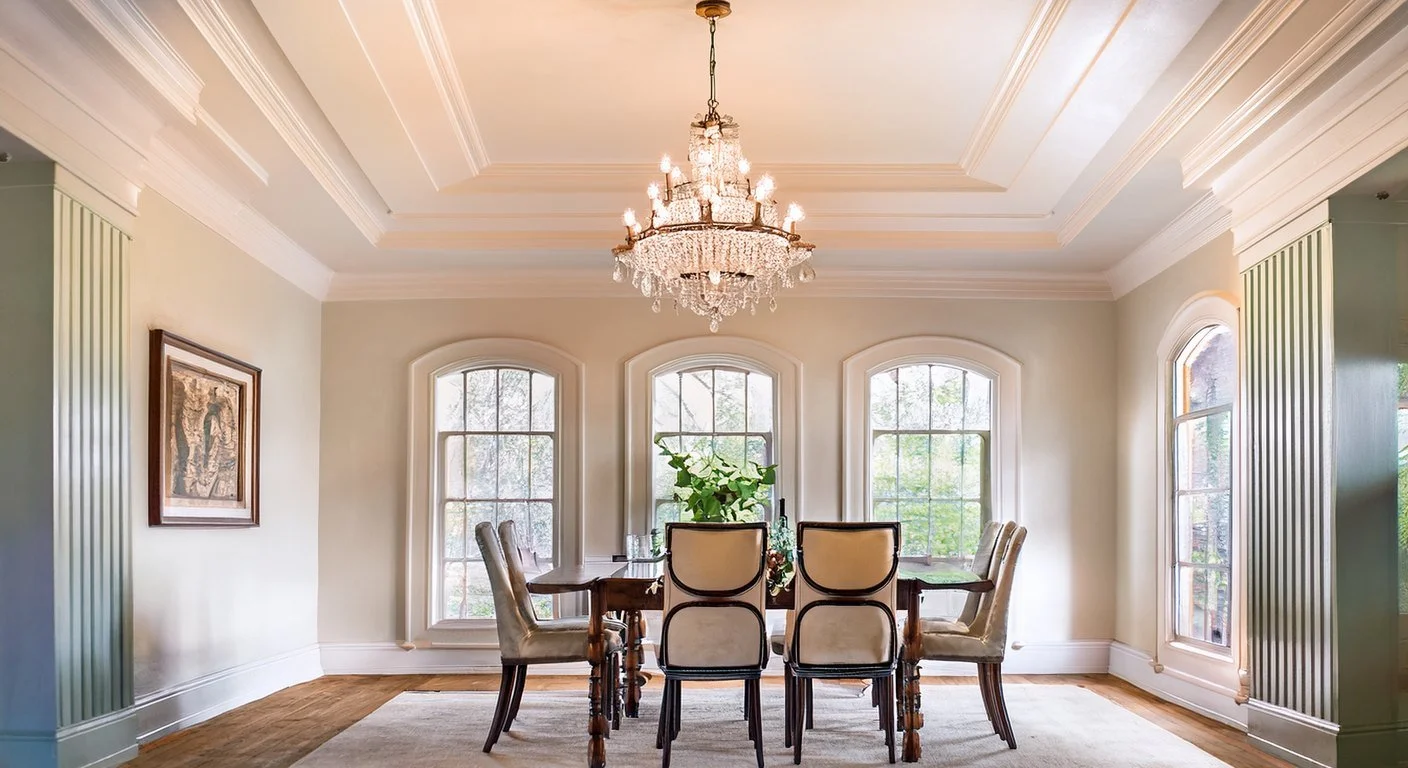
A coffered ceiling is a grid of beams, real or built up from hollow boxes, that divides a flat ceiling into recessed panels called coffers. The beams carry crown or a bead inside each panel. It is a classical detail and it reads formal and substantial.
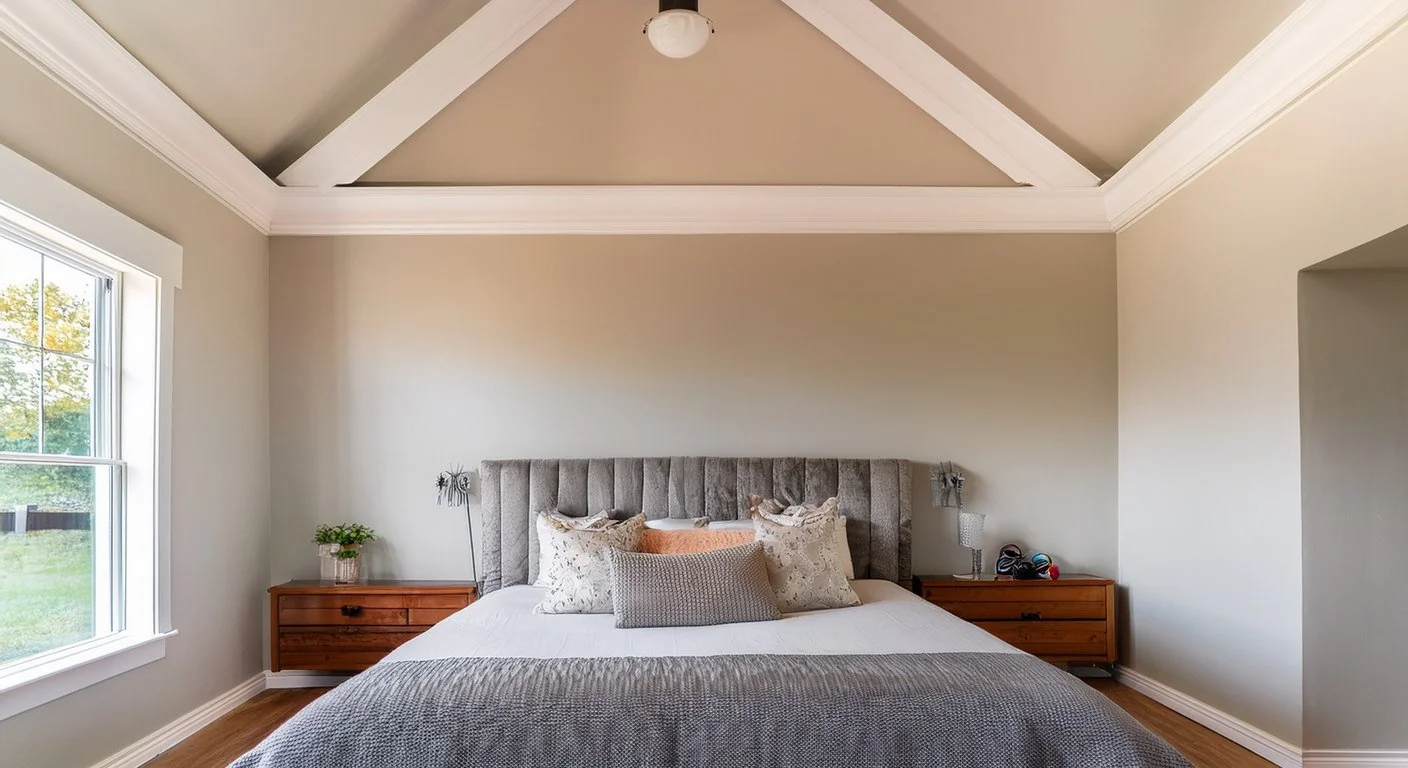
A tray ceiling is the opposite shape: a flat perimeter with a center section raised a step or two higher, like an upside down tray. Builders have put them in primary bedrooms and dining rooms across Tampa Bay since the 1990s, usually left bare. The carpentry opportunity is the step, which takes crown, a flat band or a run of lighting and turns a builder detail into a finished one.
Is your ceiling tall enough for a coffered ceiling?
This is the decision. Beams drop into the room, so a coffered ceiling takes height from a room that may not have it to spare. Published design guides generally put the comfortable floor at about nine feet, with eight foot ceilings better served by a shallow grid, a tray, or crown alone. The guides are rules of thumb and we treat them that way, but the direction is right: the lower the ceiling, the shallower and simpler the beams.
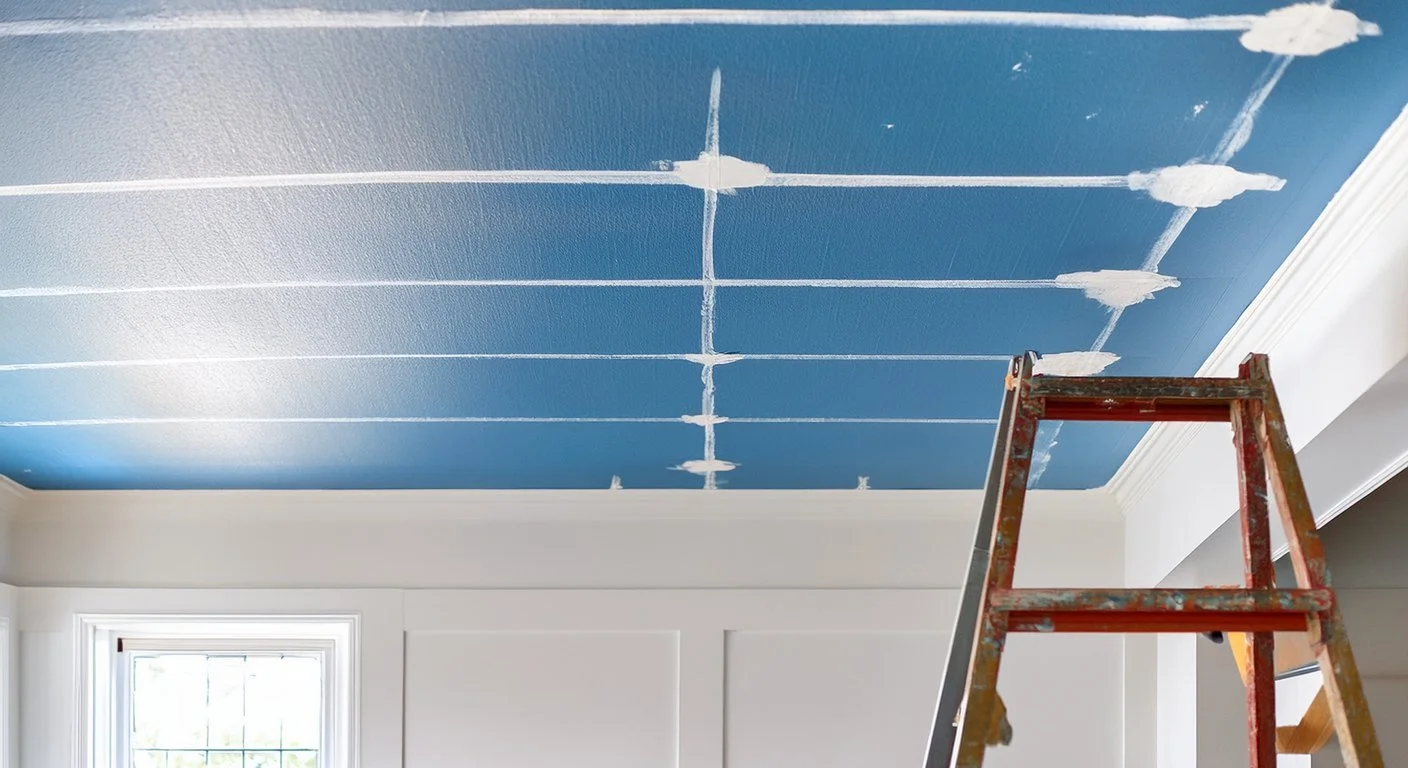
In practice we draw the grid on the ceiling first, in chalk, and stand under it. Beam depth, beam width and the number of coffers are set to the room's height and the window heads, so the ceiling looks proportioned rather than crowded. A three by three grid in a dining room is the classic layout. A long living room often wants two rows rather than one big grid.
Which Tampa Bay houses suit each one?
A coffered ceiling belongs in rooms with height and formality: the dining room of a Mediterranean Revival house in Old Northeast or Snell Isle, the living room of a newer two story home in Tampa with ten foot ceilings. In a 1920s bungalow with eight foot ceilings it is usually the wrong move, and a simple cove crown or a picture rail is the authentic one. Crown moulding styles for Florida bungalows covers that case.
A tray ceiling is already in a lot of houses built from the 1990s onward in Clearwater, Largo and the newer parts of Tampa. If you have one, the job is finishing it: crown inside the step, a flat band at the transition, paint that separates the levels, and lighting in the cove if you want it. That is a one to three day room, not a project.
How does a finish carpenter build a coffered ceiling?
The beams are built up on site from poplar or MDF stock as hollow boxes, fastened to blocking in the ceiling joists, with the long runs set first and the cross beams fitted between them. Each coffer then gets its crown or bead, coped at the inside corners rather than mitered, because coped joints stay closed as the house moves through the seasons. The whole assembly is glued and pinned, filled and painted as one piece, so there is no seam where a beam meets a beam.
Older plaster ceilings in St. Petersburg are rarely flat. The beams get scribed to the ceiling where it waves, which is the same discipline we use on crown and on paneling, and it is the reason the finished ceiling looks built with the house.
What do coffered and tray ceilings cost?
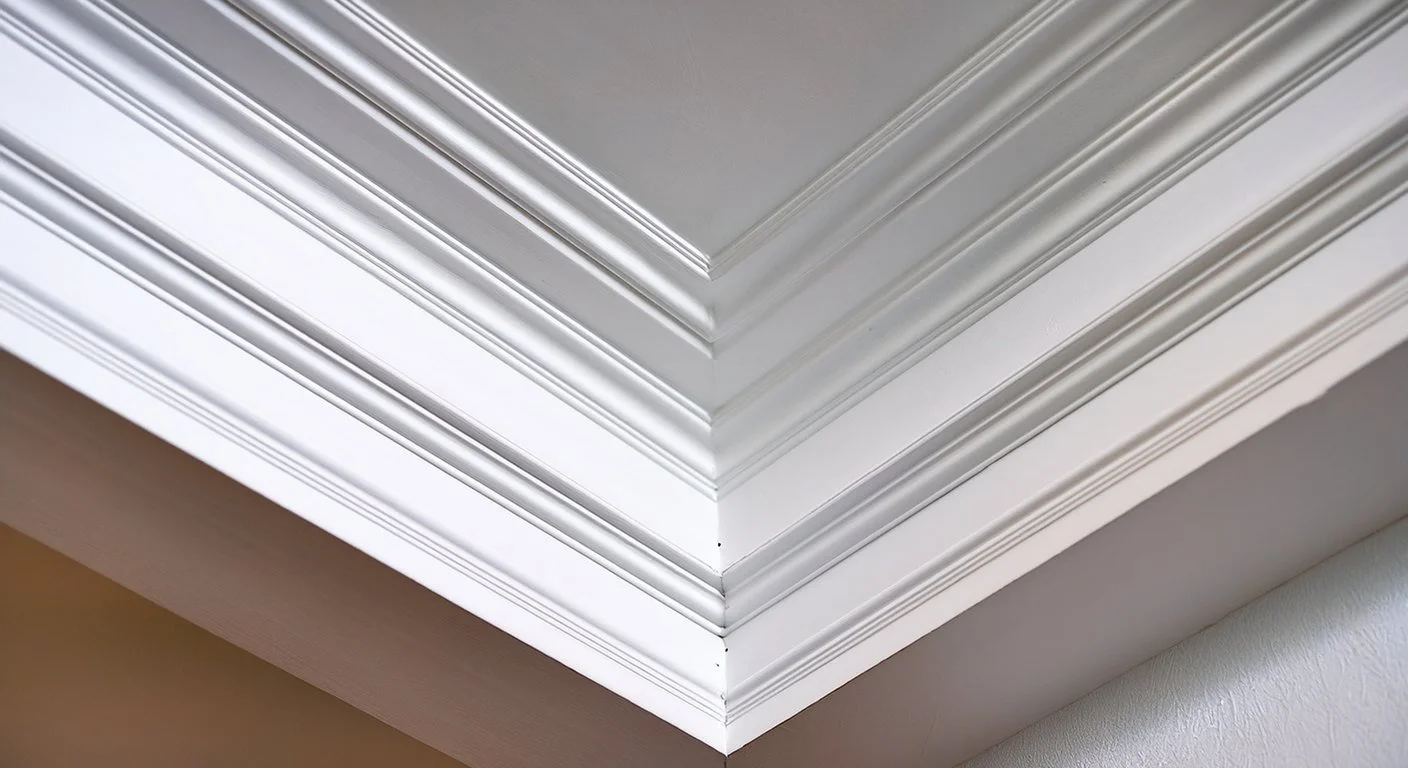
A tray ceiling finished with crown is priced like crown moulding. On J Fox's published pricing, most crown installs in the St. Petersburg area run roughly $8 to $16 per linear foot installed, depending on the profile. A coffered ceiling is a larger trim package: the beams, the crown inside each coffer, and the corners add up quickly, which is why a nine coffer dining room costs more than it looks like it should. We measure the ceiling and give a free written estimate. Our trim and finish carpentry page covers crown, coffers and whole room trim.
Where does J Fox LLC build coffered and tray ceilings?
J Fox LLC is based in St. Petersburg and builds ceiling trim across Greater Tampa Bay, within about 50 miles, from the formal rooms of Old Northeast and Snell Isle to the tray ceilings of newer homes in Clearwater and Tampa.
Frequently asked questions
What ceiling height do you need for a coffered ceiling?
Published design guides generally put the comfortable floor at about nine feet. Under eight foot ceilings a shallow grid, a tray or crown alone usually looks better. We draw the grid in chalk and check it in the room.
Can you add trim to an existing tray ceiling?
Yes. Crown inside the step, a flat band at the transition and paint that separates the levels finish a builder tray in one to three days.
Are coffered ceiling beams structural?
No. They are hollow boxes built up from poplar or MDF, fastened to blocking in the joists. They carry trim, not load.
How much does crown inside a tray ceiling cost?
It is priced like crown. On J Fox's published pricing most crown installs in the St. Petersburg area run roughly $8 to $16 per linear foot installed, depending on the profile.